
Secretary Bessent on the U.S. Economy – Key Takeaways:
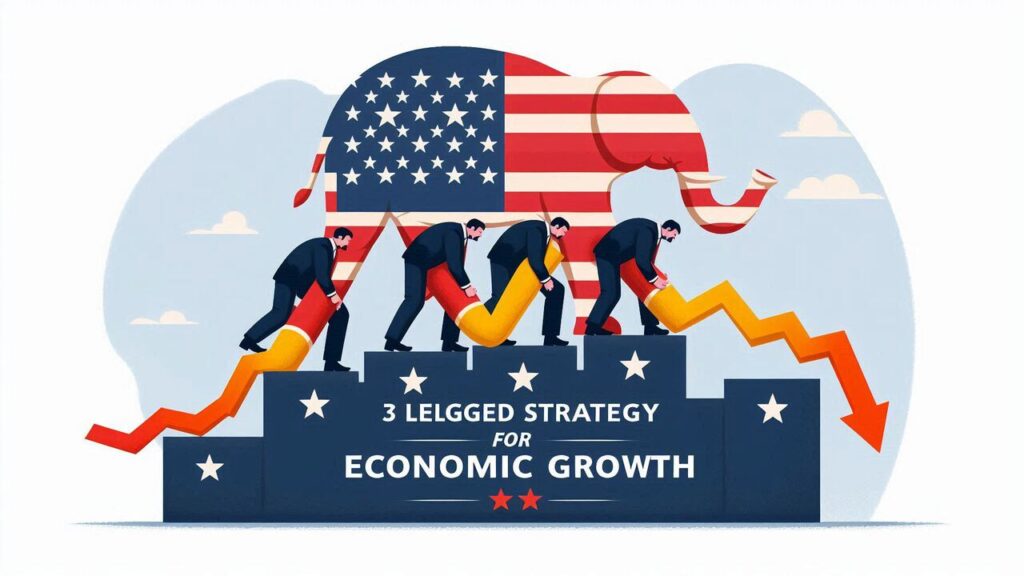
Treasury Secretary Scott Bessent outlined the Trump administration’s economic vision by focusing on three main pillars: trade reforms, tariff enforcement, and deregulation. He called this strategy the “three-legged stool” that supports income growth and job creation across the country.
Contrary to earlier media warnings, Bessent pointed out that the tariffs imposed under President Trump did not lead to runaway inflation. In fact, he emphasized that inflation has dropped to a four-year low, supporting the idea that the policies were effective without hurting consumers.
On trade with China, Bessent clarified that the goal isn’t to “decouple” from China, but rather to push for fair and reciprocal trade. He expressed optimism about ongoing talks with Chinese officials.
Regarding the national debt, Bessent firmly stated that the U.S. will not default, and he urged bipartisan cooperation to responsibly raise the debt ceiling. He also highlighted that mortgage rates have come down, improving affordability for many Americans.
Finally, he noted that recent trends in U.S. Treasury yields suggest that the Federal Reserve should consider cutting interest rates—another move aimed at boosting economic growth.
Extra Reference :
Trump-Era Economic Policies: How They Could Boost the U.S. Economy
In a recent interview on Fox News, Treasury Secretary Scott Bessent emphasized how President Trump’s core economic strategies are structured to revive the U.S. economy and support working Americans. His message centered around a focused plan of monetary easing, structural reforms, and fiscal balance.
1) Lower Interest Rates Can Trigger Economic Expansion
Secretary Bessent noted that falling Treasury yields are a strong signal for the Federal Reserve to consider interest rate cuts. Cutting interest rates is one of the most effective tools to boost an economy. Here’s why:
- It makes borrowing cheaper for businesses and individuals, encouraging more investment and consumer spending.
- Homeowners benefit through lower mortgage rates, making housing more affordable and boosting the construction and real estate sectors.
- Lower rates can stimulate job growth, particularly in manufacturing, housing, and retail, by freeing up capital for hiring and expansion.
Already, 30-year mortgage rates have declined significantly, increasing access to home ownership for middle-class Americans.
2) “Three-Legged Stool” Strategy: Trade Reforms, Tariffs, Deregulation
Bessent described the Trump economic framework as a “three-legged stool”:
- Trade Reforms: Target unfair trade practices to protect U.S. industries, bring back manufacturing, and ensure fair market access.
- Tariff Enforcement: Imposing targeted tariffs not only helps in correcting trade deficits but boosts domestic production by making foreign alternatives less competitive.
- Deregulation: Cutting red tape for industries such as energy, finance, and small business has helped reduce costs, leading to faster job creation and income growth.
Together, these strategies are designed to rebuild supply chains within the U.S., boost industrial jobs, and reduce dependency on foreign labor markets.
3) Tariffs Did Not Trigger Inflation—They Coincided with Inflation Falling
A key talking point was the false narrative that tariffs would increase consumer prices. In contrast, Secretary Bessent pointed out:
- Inflation is now at a 4-year low, defying early projections that tariffs would cause price surges.
- The Trump administration believes that smart tariffs, when combined with competitive U.S. production and strategic supply chain management, can shield consumers from inflation.
This indicates that the inflationary impact of tariffs has been overestimated—and the economy can absorb such measures without hurting everyday Americans.
4) National Debt, Inflation, and Mortgage Rates: Economic Stability in Numbers
Bessent reinforced that the U.S. would never default on its debt, emphasizing the need to responsibly manage the national debt ceiling. While debates continue in Congress, it’s important to note:
- The U.S. debt-to-GDP ratio stabilized under key Trump fiscal measures, including increased tariff revenues and controlled federal spending.
- Mortgage rates are now among the lowest in recent years, falling below 7% for the 30-year fixed rate, making homes more accessible.
- Inflation, measured by CPI, has dropped below 3%, the lowest since 2020—helping families deal with the cost of living.
These trends indicate that the broader economic environment is cooling inflation without slowing growth, a rare and positive signal.
Conclusion
Trump’s policy mix of monetary stimulus, strategic tariffs, and regulatory rollback appears to be laying the groundwork for a resilient U.S. economy—focused on self-reliance, job creation, and stable prices. If current signals hold, the economy could benefit from:
- Higher domestic investment
- More industrial employment
- Stronger wage growth
- Lower inflation and interest rates
Final Words :
As of June 7, 2025, if we consider that Donald Trump began his second term on January 20, 2025, then:
✅ Trump’s second term has been underway for 139 days.
Here’s the breakdown:
- Start Date: January 20, 2025
- Today: June 7, 2025
- Total Days Passed: 139 days
Summary of Progress in These 139 Days
Despite just under five months in office, the Trump administration has already launched a robust agenda centered around:
Three-Legged Economic Strategy
- Tariffs & Trade – Tariffs on Chinese goods have increased significantly, reducing dependency and generating over $68 billion in revenue already in 2025.
- Deregulation & Domestic Investment – SoftBank and AI-related firms like Oracle and OpenAI have committed over $600 billion in future investments, supporting infrastructure and job creation.
- National Security & Defense – Defense spending is nearing $1 trillion, with special focus on AI-driven warfare, drone defense systems, and supply chain resilience post-Ukraine and Israel conflicts.
🇺🇸 All in all
Trump’s government has only completed 139 out of 1,461 days of the term (just under 10%), yet it’s already laying the groundwork for:
- Job creation
- Manufacturing revival
- Economic self-reliance
- National defense upgrades
So, that’s it for Trump Government’s 3 Legged Stool Strategy for Future Economic growth of USA.
I hope you like it.
Happy Economy
More To Read :
Stocks : Best USA Stocks – Full Analysis
Sports : Best Gossips of Footballing Legends