
Why Indonesia is One of the Best Tourist Places in the World
1️⃣ Massive Tourist Popularity
Indonesia welcomes 11–16 million international tourists annually (post-pandemic recovery phase). Before COVID, it crossed 16 million visitors per year, making it one of Southeast Asia’s top destinations alongside Thailand and Malaysia.
Main tourist hubs:
- Bali
- Jakarta
- Lombok
- Komodo Island
- Yogyakarta
2️⃣ Extremely Friendly People
Indonesians are known for:
- Warm hospitality
- Smiling nature
- Respect for tourists
- Strong cultural values
In places like Bali, tourism is the backbone of the economy, so locals are very welcoming and helpful.
3️⃣ Currency – Affordable for Tourists
Indonesia uses the Indonesian Rupiah (IDR).
- Very affordable compared to USD, Euro, or INR.
- Food, hotels, and transport are budget-friendly.
- Luxury resorts are also cheaper than in many Western countries.
(You can use the converter above to give readers a live reference.)
4️⃣ Natural Beauty – One of the Most Diverse in the World
Indonesia has:
- 17,000+ islands
- Active volcanoes
- Rainforests
- Coral reefs
- White sand beaches
Famous natural attractions:
- Mount Bromo
- Raja Ampat
- Borobudur
- Tanah Lot
Few countries offer beaches, jungles, temples, volcanoes, and diving spots all in one nation.
5️⃣ Natural Calamity Safety Level
Indonesia lies on the Pacific “Ring of Fire,” so:
- Earthquakes can occur
- Some volcanoes are active
- Occasional tsunamis
However:
- Tourist areas like Bali have strong safety systems.
- Hotels follow evacuation protocols.
- Millions visit safely every year.
Risk exists, but it is manageable with awareness.
6️⃣ Best Time to Visit Indonesia
Best Season:
April to October (Dry Season)
- Less rainfall
- Best for beaches and island hopping
- Perfect for trekking volcanoes
Rainy Season:
November to March
- Cheaper hotels
- Fewer crowds
- Short tropical showers (usually not full-day rain)
all in all
Indonesia is one of the world’s most diverse travel destinations because of its natural beauty, affordability, welcoming culture, and unique mix of adventure and spirituality. With millions of visitors each year, it remains a top tropical paradise despite being located in a volcanic zone.
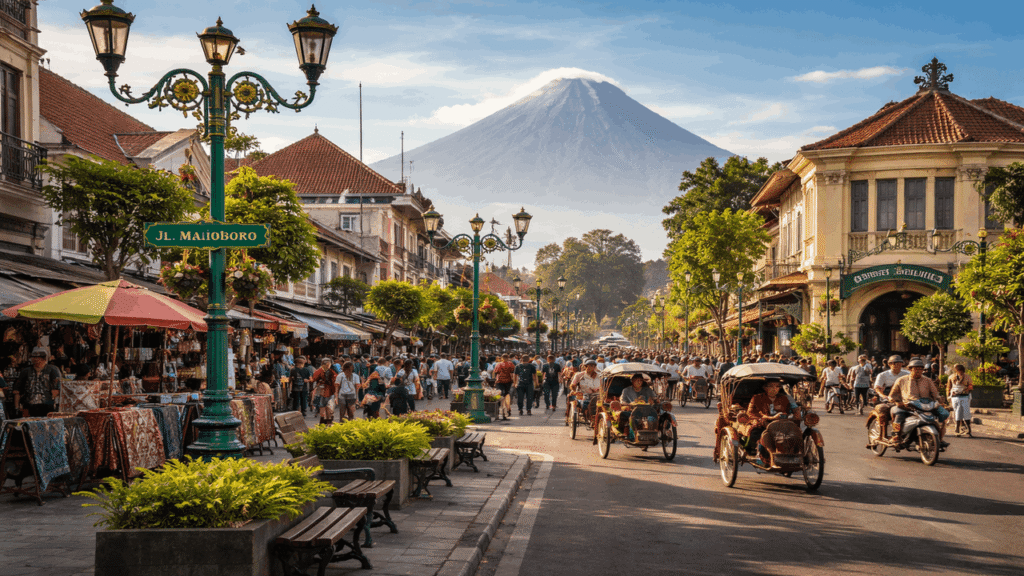
Best Historical Places to Visit Indonesia :
1️⃣ Borobudur
Location: Central Java
Built: 8th–9th century (Sailendra Dynasty)
Historical Significance:
- World’s largest Buddhist temple.
- Built during the powerful Buddhist Sailendra dynasty.
- Represents Buddhist cosmology in stone carvings.
- Over 2,600 relief panels and 500+ Buddha statues.
- UNESCO World Heritage Site.
It shows Indonesia’s strong ancient Buddhist roots before Islamic influence.
2️⃣ Prambanan
Location: Near Yogyakarta
Built: 9th century (Mataram Kingdom)
Historical Significance:
- Largest Hindu temple complex in Indonesia.
- Dedicated to Trimurti: Brahma, Vishnu, Shiva.
- Shows strong Indian cultural and religious influence.
- UNESCO World Heritage Site.
It proves Indonesia once had a powerful Hindu civilization.
3️⃣ Demak Great Mosque
Location: Central Java
Built: 15th century
Historical Significance:
- One of the oldest mosques in Indonesia.
- Built by the Wali Songo (Nine Saints of Islam).
- Symbol of early Islamic expansion in Java.
Represents transition from Hindu-Buddhist kingdoms to Islamic sultanates.
4️⃣ Fort Rotterdam
Location: Makassar, Sulawesi
Built: 17th century
Historical Significance:
- Built by the Gowa Kingdom, later taken by Dutch.
- Used as Dutch colonial headquarters.
- Symbol of colonial control in eastern Indonesia.
Shows European colonial influence in Indonesia.
5️⃣ Jakarta Old Town (Kota Tua)
Location: Jakarta
Historical Significance:
- Former Dutch colonial capital (Batavia).
- Contains old Dutch buildings and museums.
- Important center of trade during VOC (Dutch East India Company).
You can see European architecture still standing.
6️⃣ Muara Takus Temple
Location: Sumatra
Built: 11th–12th century
Historical Significance:
- Linked to the Srivijaya Empire.
- Important Buddhist learning center.
- Shows Sumatra’s role in maritime trade and religion.
7️⃣ Taman Sari
Location: Yogyakarta
Built: 18th century
Historical Significance:
- Royal garden of the Sultan of Yogyakarta.
- Combination of Javanese and Portuguese architectural style.
- Used as resting and meditation place for royalty.
Represents Islamic-era Javanese royalty.
8️⃣ Candi Sukuh
Location: Central Java
Built: 15th century
Historical Significance:
- Late Hindu temple.
- Unique pyramid-like structure.
- Built during decline of Majapahit Empire.
Shows final phase of Hindu civilization before Islam became dominant.
9️⃣ Sultan’s Palace of Cirebon
Location: West Java
Historical Significance:
- Palace of Islamic Sultanate of Cirebon.
- Mix of Chinese, Arabic, and Javanese influences.
- Important trading and religious center.
🔟 National Monument (Monas)
Location: Jakarta
Built: 1961–1975
Historical Significance:
- Symbol of Indonesia’s independence.
- Commemorates struggle against Dutch colonial rule.
- Built during President Sukarno’s era.
Represents modern national identity.
Best Natural Places to visit Indonesia :
1️⃣ Mount Bromo
Location: East Java
Why Visit:
- Iconic smoking volcano.
- Stunning sunrise views over a sea of volcanic sand.
- Part of Bromo Tengger Semeru National Park.
This is one of Indonesia’s most photographed landscapes.
2️⃣ Komodo National Park
Location: East Nusa Tenggara
Why Visit:
- Home of the Komodo dragon.
- Pink sand beaches.
- Crystal-clear waters for snorkeling and diving.
- Dramatic island hills and viewpoints.
UNESCO World Heritage Site and one of Indonesia’s most unique ecosystems.
3️⃣ Raja Ampat
Location: West Papua
Why Visit:
- World-class diving destination.
- Highest marine biodiversity on Earth.
- Turquoise lagoons and limestone islands.
A dream place for nature lovers and underwater explorers.
4️⃣ Nusa Penida
Location: Near Bali
Why Visit:
- Kelingking Beach cliff viewpoint.
- Natural rock formations.
- Blue lagoons and dramatic ocean cliffs.
Perfect for Instagram-worthy landscapes.
5️⃣ Gili Islands
Location: Near Lombok
Why Visit:
- No cars allowed (only bicycles and horse carts).
- White sand beaches.
- Clear waters and coral reefs.
- Relaxed tropical vibe.
Ideal for honeymooners and beach lovers.
6️⃣ Lake Toba
Location: North Sumatra
Why Visit:
- Largest volcanic lake in the world.
- Formed by a massive supervolcano eruption.
- Home to Batak culture.
- Cool mountain climate.
One of the most peaceful landscapes in Indonesia.
7️⃣ Tegallalang Rice Terraces
Location: Bali
Why Visit:
- Beautiful stepped green fields.
- Traditional Balinese irrigation system (Subak).
- Perfect photography spot.
Shows harmony between nature and traditional farming.
8️⃣ Mount Rinjani
Location: Lombok
Why Visit:
- Second-highest volcano in Indonesia.
- Crater lake (Segara Anak).
- Challenging trekking routes.
- Incredible panoramic views.
Perfect for adventure travelers.
9️⃣ Bunaken National Park
Location: North Sulawesi
Why Visit:
- Famous for coral reefs.
- Ideal for scuba diving.
- Diverse marine life.
A paradise for underwater photography.
🔟 Tumpak Sewu Waterfall
Location: East Java
Why Visit:
- Known as Indonesia’s “Niagara Falls.”
- Massive curtain-style waterfall.
- Surrounded by lush jungle.
One of the most breathtaking waterfalls in Southeast Asia.
Why Indonesia’s Landscapes Are Special
Indonesia offers:
- Active volcanoes
- Tropical beaches
- Dense rainforests
- Marine biodiversity
- High mountains
- Traditional agricultural landscapes
Conclusion :
Travel Safety in Indonesia: What Every Tourist Should Know
Indonesia is one of the most stunning destinations in the world — but it lies on the Pacific Ring of Fire, making it geologically active. Understanding natural risks helps travelers stay safe and confident.
Earthquakes & Volcanoes
Indonesia has over 120 active volcanoes.
Famous active volcanoes include:
- Mount Merapi
- Mount Bromo
- Mount Rinjani
What Travelers Should Know:
- Small earthquakes are common but usually not dangerous.
- Major tourist areas have monitoring systems.
- Volcano trekking is allowed only when safe.
- Always check local advisories before hiking.
Indonesia has strong volcanic monitoring agencies, and eruptions are usually predicted in advance.
Tsunami Awareness
Indonesia has experienced major tsunamis in the past, including:
- 2004 Indian Ocean tsunami (affected Aceh region)
- 2018 Sulawesi tsunami
Coastal and island destinations like:
- Bali
- Lombok
- Padang
are near tectonic zones.
Safety Tips:
- Learn tsunami evacuation routes at your hotel.
- If you feel a strong earthquake near the coast, move to higher ground immediately.
- Follow local sirens and official instructions.
- Avoid staying in isolated coastal areas without warning systems.
Important rule:
If the sea suddenly pulls back unnaturally, run to higher ground immediately.
3️⃣ Flooding & Monsoon Season
During rainy season (November–March):
- Heavy rainfall may cause flooding.
- Landslides can happen in mountainous regions.
Best safety practice:
- Avoid remote trekking during heavy rain.
- Check weather forecasts daily.
4️⃣ General Travel Safety
Indonesia is generally safe for tourists.
- Low violent crime in tourist areas.
- Petty theft (like pickpocketing) can happen in crowded cities like Jakarta.
- Drink bottled water.
- Use registered taxis or ride apps.
How You Can Increase Your Safety as a Traveler
Safety is not only about government systems — it also depends on smart travel habits.
Water & Swimming Safety
Indonesia is famous for beaches, islands, and boat tours. To stay safe:
- Always wear a life jacket during boat rides, snorkeling, or island hopping.
- Do not remove your safety vest for photos.
- Swim only in designated safe zones.
- Avoid swimming during rough waves or red-flag warnings.
- Do not swim alone in remote beaches.
- Check tide conditions before entering the sea.
- Follow lifeguard instructions strictly.
Even strong swimmers should wear flotation gear during open-sea activities.
Volcano & Trekking Safety
- Go only with licensed guides.
- Check official volcanic activity updates.
- Wear proper hiking shoes.
- Carry water and emergency supplies.
Weather Awareness
- Monitor local weather forecasts daily.
- Avoid sea travel during storm warnings.
- Postpone trekking during heavy rainfall.
Health & Emergency Preparedness
- Buy comprehensive travel insurance.
- Save local emergency numbers in your phone.
- Keep hotel address written down.
- Inform family about your travel plans in remote areas.
Final Safety Perspective
Indonesia is not “dangerous” — it is naturally dynamic. Like many beautiful tropical destinations, it requires awareness.
With:
✔ Basic preparation
✔ Respect for local advisories
✔ Proper safety gear (especially life jackets near water)
✔ Smart decision-making
Indonesia becomes a safe, unforgettable adventure destination.
So, this was it in this travel blog regarding Indonesia and best places to visit Indonesia. I hope you like it