
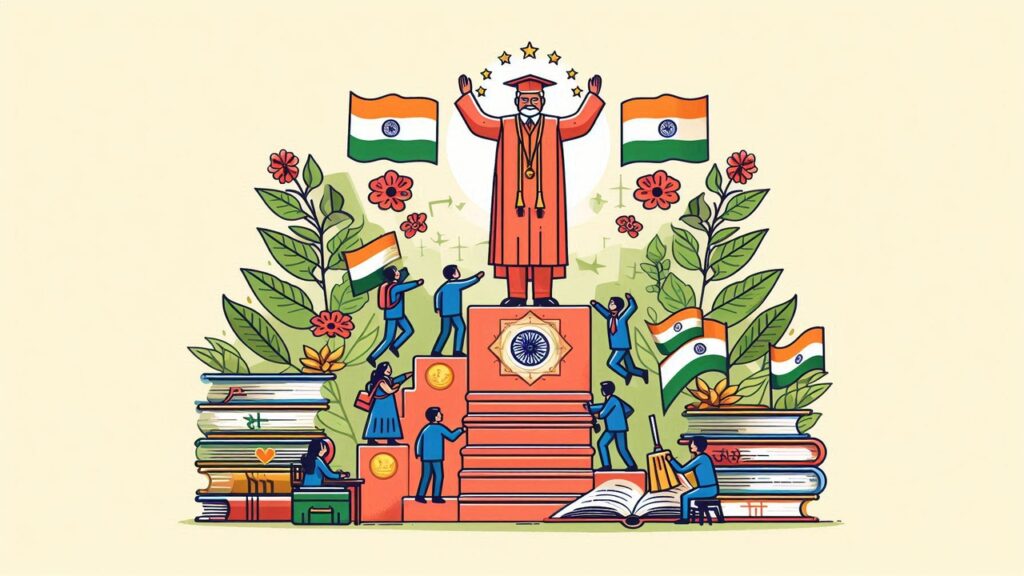
In this blog you are going to get info on success of Ministry of Eduction during 2014-24 with UPSC Q & A. Get some glance of it because anyways it is good for your General Knowledge also.
Before starting I want to spread info about coding as well. There are MOOC courses and W3schools on the Internet which are free sources of Coding knowledge and Programming. So if you want you can try to go for that also.
Here are a few ways to make money in emergency.
Introduction: Ministry of Education (2014–2024)
The Ministry of Education, formerly known as the Ministry of Human Resource Development (MHRD), plays a central role in shaping India’s future through reforms in school and higher education. Under Prime Minister Narendra Modi’s leadership (2014–2024), the Ministry underwent a major transformation focused on innovation, accessibility, digital empowerment, and alignment with global standards.
Role and Importance
The Ministry is responsible for:
- Policy-making and implementation in primary, secondary, and higher education.
- Enhancing the quality of education and research.
- Expanding skill-based learning to make the youth employable.
- Promoting equity and inclusion in education across regions and social classes.
Its importance lies in developing human capital, reducing unemployment, and positioning India as a global knowledge hub.
Key Achievements and Successes (2014–2024)
1. Launch of National Education Policy (NEP) 2020
- First major reform in education since 1986.
- Focused on holistic learning, multilingualism, vocational education, and critical thinking.
- Introduced 5+3+3+4 system replacing 10+2 structure.
2. Digital Education Drive
- Initiatives like SWAYAM, PM eVidya, DIKSHA and National Digital Education Architecture (NDEAR)boosted online learning.
- Digital University launched to make quality education accessible to all.
3. Increased Budget Allocation
- Education budget crossed ₹1 lakh crore in 2023–24, the highest ever.
- Allocation rose by nearly 80% from 2014 levels.
4. Skill India Mission & PM Kaushal Vikas Yojana
- Trained over 1.4 crore youth in industry-relevant skills.
- Contributed to job creation in IT, manufacturing, and service sectors.
5. Higher Education Expansion
- Rapid increase in IITs, IIMs, IIITs, and Central Universities.
- Establishment of National Research Foundation (NRF) to fund innovation and R&D.
6. Internationalization of Education
- Introduction of Study in India and opening doors for foreign universities to operate in India.
- NEP allowed foreign institutions in GIFT City and encouraged global collaborations.
Contribution to GDP
- Education sector’s share in GDP rose from 3.8% in 2014 to around 4.4% by 2023, showing steady growth.
- With NEP 2020, the target is to raise education spending to 6% of GDP, aligning with global benchmarks.
Jobs Created (Direct and Indirect)
- Over 1.5 crore jobs created through educational infrastructure, EdTech expansion, vocational training, and skilling initiatives.
- Boosted employment in teaching, content creation, IT training, coaching, and digital platforms.
Conclusion
The Ministry of Education (2014–2024) under the Modi government has taken bold, future-oriented steps to transform India’s education system. By focusing on innovation, inclusivity, employability, and digital access, it has laid the groundwork for a knowledge-driven economy, empowering millions and contributing significantly to nation-building.
UPSC Questions regarding Ministry of Education :
1) Discuss the significance of the National Education Policy (NEP) 2020 in transforming the Indian education system. How far has its implementation been successful between 2020 and 2024?
The National Education Policy (NEP) 2020 is a landmark reform aimed at transforming India’s education system to meet 21st-century challenges. It emphasizes holistic development, flexibility, multidisciplinary learning, and digital integration, replacing the 34-year-old National Policy on Education (1986).
Key Significance of NEP 2020 in Transforming Indian Education
- Early Childhood Care & Education (ECCE)
- Focus on foundational literacy and numeracy through a 5+3+3+4 curricular structure, replacing the 10+2 system.
- Balvatikas and Anganwadi integration for universal pre-primary education.
- Multidisciplinary & Flexible Learning
- No rigid separation between arts, science, and commerce; students can choose subjects across streams.
- Introduction of four-year undergraduate programs with multiple exit options (certificate, diploma, degree).
- Technology Integration & Digital Education
- Emphasis on online learning, AI, coding, and digital infrastructure (e.g., DIKSHA platform, SWAYAM MOOCs).
- National Digital Education Architecture (NDEAR) for seamless digital learning.
- Vocational Education & Skill Development
- Internships and vocational training from Class 6 onwards to enhance employability.
- Integration with National Skills Qualification Framework (NSQF).
- Multilingualism & Regional Languages
- Medium of instruction till Grade 5 in mother tongue/regional language to improve comprehension.
- Promotion of Sanskrit, classical languages, and Indian Knowledge Systems (IKS).
- Higher Education Reforms
- Single regulator (HECI) replacing UGC and AICTE for higher education.
- Foreign universities allowed to set up campuses in India.
- National Research Foundation (NRF) to boost research culture.
- Equity & Inclusion
- Gender Inclusion Fund for disadvantaged groups.
- Special provisions for Scheduled Castes (SCs), Scheduled Tribes (STs), OBCs, and differently-abled students.
Implementation Progress (2020-2024)
While NEP 2020 is visionary, its implementation has been gradual and uneven:
✅ Achievements:
- National Curriculum Framework (NCF) 2023 released, aligning with NEP’s vision.
- PM SHRI Schools launched as model schools for NEP implementation.
- Multiple entry-exit options introduced in some universities (e.g., Delhi University, JNU).
- DIKSHA and SWAYAM expanded for digital learning.
- Over 1,500 higher education institutions have adopted four-year undergraduate programs.
❌ Challenges & Delays:
- Slow adoption by states due to financial and administrative hurdles.
- Resistance to mother-tongue instruction in some regions.
- Lack of uniform teacher training for NEP-aligned pedagogy.
- HECI and NRF yet to be fully operationalized.
- Foreign universities hesitant to set up campuses due to regulatory concerns.
Conclusion
NEP 2020 is a transformative policy, but its success depends on effective implementation, funding, and stakeholder collaboration. While progress has been made in curriculum reforms, digital education, and higher education flexibility, full realization may take another 5-10 years. The next phase (2024 onwards) will be crucial in addressing gaps, especially in teacher training, vocational integration, and equitable access.
2) Critically analyze the role of the Ministry of Education in promoting inclusive and equitable education in India during 2014–2024.
Critical Analysis of the Ministry of Education’s Role in Promoting Inclusive & Equitable Education (2014–2024)
The Ministry of Education (MoE), formerly the Ministry of Human Resource Development (MHRD), has undertaken several initiatives to promote inclusive and equitable education in India between 2014 and 2024. While progress has been made in policy reforms, digital education, and access expansion, challenges remain in implementation, funding, and socio-economic disparities.
Key Initiatives for Inclusive & Equitable Education (2014–2024)
1. Policy & Structural Reforms
✅ National Education Policy (NEP) 2020
- Emphasizes equity, multilingualism, and accessibility for marginalized groups (SC/ST/OBC, girls, disabled students).
- Gender Inclusion Fund and Special Education Zones (SEZs) for disadvantaged regions.
✅ Samagra Shiksha Abhiyan (2018)
- Merged Sarva Shiksha Abhiyan (SSA), Rashtriya Madhyamik Shiksha Abhiyan (RMSA), and Teacher Education (TE) for holistic school education.
- Focus on girls, SC/ST students, and children with disabilities (CwD) through scholarships, hostels, and assistive devices.
✅ PM SHRI Schools (2022)
- Upgrading 14,500 schools as NEP 2020 model schools with modern infrastructure.
2. Digital & Distance Learning Expansion
✅ DIKSHA, SWAYAM, e-Pathshala
- Improved digital access, especially during COVID-19, but rural-urban divide persists.
✅ NISHTHA Teacher Training Program
- Online capacity-building for teachers, but uneven implementation across states.
3. Equity-Focused Schemes
✅ Beti Bachao Beti Padhao (BBBP)
- Increased girls’ enrollment, but dropout rates remain high in secondary education.
✅ Kasturba Gandhi Balika Vidyalayas (KGBVs)
- Residential schools for girls from marginalized communities; limited scalability.
✅ National Scholarship Portal (NSP)
- Streamlined scholarships for SC/ST/OBC/Minority students, but delays in disbursement.
✅ Inclusive Education for Disabled (Rights of Persons with Disabilities Act, 2016)
- Accessible textbooks, assistive tech, and resource teachers, but poor infrastructure in many schools.
4. Higher Education Inclusivity
✅ National Institutional Ranking Framework (NIRF)
- Encourages diversity, but elite institutions still dominate.
✅ Fee Waivers & Financial Aid
- Central Sector Scheme of Scholarships, Post-Matric Scholarships, but coverage gaps remain.
✅ Foreign Universities Bill (Pending)
- Could increase opportunities, but elitism concerns persist.
Critical Challenges & Failures
1. Implementation Gaps
❌ NEP 2020 rollout slow – Many states yet to adopt key reforms (e.g., mother-tongue instruction, vocational training).
❌ Teacher shortages & training gaps – Especially in rural and tribal areas.
❌ Digital divide – Poor internet access in remote regions limits e-learning benefits.
2. Persistent Inequalities
❌ Caste & Gender Disparities
- SC/ST students still face discrimination; girls’ dropout rates rise in higher classes.
❌ Regional Imbalance - Southern states outperform BIMARU states (Bihar, MP, Rajasthan, UP) in literacy & infrastructure.
3. Underfunding & Bureaucratic Delays
❌ Education budget stagnant (~3% of GDP, below NEP’s 6% target).
❌ Scholarship delays & corruption – Many deserving students miss benefits.
4. Privatization & Commercialization
❌ Fee hikes in elite institutions (IITs, NITs, private colleges) exclude low-income students.
❌ Coaching culture dominance – Favors urban, affluent students in competitive exams.
Conclusion: Progress with Persistent Gaps
The Ministry of Education made notable strides in policy frameworks (NEP 2020, Samagra Shiksha) and digital education. However, inequities persist due to weak implementation, funding shortfalls, and socio-cultural barriers.
Way Ahead :
✔ Increase education spending to 6% of GDP as per NEP 2020.
✔ Strengthen last-mile delivery in rural/tribal areas.
✔ Enforce anti-discrimination policies for SC/ST/girls/disabled students.
✔ Fast-track NEP implementation with state cooperation.
While the MoE’s efforts are directionally correct, execution remains inconsistent, leaving many marginalized students behind. The next decade (2024–2034) will be crucial for achieving true inclusivity.
3) Evaluate the impact of digital initiatives like SWAYAM, PM eVidya, and DIKSHA in bridging the urban-rural divide in access to education.
Evaluation of Digital Initiatives (SWAYAM, PM eVidya, DIKSHA) in Bridging the Urban-Rural Education Divide
India’s digital education initiatives—SWAYAM, PM eVidya, and DIKSHA—were launched to enhance accessibility, especially during the COVID-19 pandemic. While they have improved remote learning opportunities, their effectiveness in bridging the urban-rural divide remains uneven due to infrastructural, socio-economic, and implementation challenges.
1. Overview of Key Digital Initiatives
A. SWAYAM (Study Webs of Active Learning for Young Aspiring Minds)
- Objective: Provide free online courses from school to university level.
- Features:
- Courses from top institutions (IITs, NCERT, etc.).
- Credit transfer for higher education.
B. PM eVidya (2020 – Part of Atmanirbhar Bharat)
- Objective: Unify digital education under “One Nation, One Digital Platform”.
- Components:
- 12 DTH TV channels (one per class) for students without internet.
- Digital labs, QR-coded textbooks, and podcast content (Shiksha Vani).
C. DIKSHA (Digital Infrastructure for Knowledge Sharing)
- Objective: National school education platform for teachers & students.
- Features:
- Multilingual e-content (aligned with NCERT).
- Teacher training modules and student assessments.
2. Positive Impact: How Digital Initiatives Helped
✅ Increased Access to Quality Content
- SWAYAM brought IIT/NIT-level courses to rural students.
- DIKSHA provided local language content (30+ languages).
✅ Alternative Learning During COVID-19
- PM eVidya’s TV & radio broadcasts helped offline learners.
- DIKSHA saw 3.4 billion+ hits (2020-22), showing high rural engagement.
✅ Teacher Empowerment
- NISHTHA training via DIKSHA upskilled 7 million+ teachers.
✅ Cost-Effective Learning
- Free courses reduced dependency on private coaching (benefiting low-income families).
3. Limitations & Urban-Rural Divide Persists
❌ Internet & Device Accessibility
- Only 27% rural households have internet (vs. 44% urban) (NSSO 2021).
- Mobile-only access limits learning (small screens, data costs).
❌ Electricity & Digital Infrastructure Gaps
- 25% schools lack electricity (UDISE+ 2021-22), affecting DIKSHA/SWAYAM usage.
- TV/radio-based learning (PM eVidya) had low interaction & feedback mechanisms.
❌ Language & Content Barriers
- SWAYAM’s premium courses mostly in English, limiting rural reach.
- DIKSHA’s content quality varies across states.
❌ Low Completion Rates & Engagement
- SWAYAM: Only 10-15% course completion rate (lack of mentorship).
- PM eVidya: Passive learning (TV/radio) led to low retention.
❌ Teacher & Student Readiness
- Many rural teachers lack digital literacy to guide students.
- Parents in rural areas unable to support online learning.
4. Comparative Analysis: Urban vs. Rural Adoption
| Factor | Urban Areas | Rural Areas |
|---|---|---|
| Internet Access | High (4G/WiFi) | Low (2G/No signal) |
| Device Availability | Smartphones/Laptops | Basic phones, shared devices |
| Content Relevance | English/Advanced | Need for local language & basics |
| Teacher Support | Tech-savvy educators | Limited digital training |
| Engagement | Regular online classes | Irregular due to connectivity |
5. Way Ahead : Bridging the Divide
✔ Strengthen Offline-Digital Hybrid Models
- Expand community Wi-Fi hubs (e.g., Common Service Centres).
- Use USB/SD card distribution of DIKSHA content for offline access.
✔ Local Language & Contextual Content
- More vernacular courses on SWAYAM.
- AI-based voice assistants for illiterate parents.
✔ Infrastructure Investment
- 5G in rural schools, solar-powered digital labs.
- Free tablets/smartphones under state schemes (e.g., Kerala’s Hi-Tech School Project).
✔ Teacher & Parent Training
- Mandatory digital pedagogy in B.Ed programs.
- Awareness camps for parents on using DIKSHA/PM eVidya.
✔ Public-Private Partnerships (PPP)
- Reliance Jio, Google, and Microsoft can subsidize rural ed-tech.
- Airtel/BSNL can offer zero-rated education data packs.
Conclusion: Progress Made, But Divide Remains
Digital initiatives expanded access but failed to fully bridge the urban-rural gap due to infrastructural and socio-economic barriers. While SWAYAM, DIKSHA, and PM eVidya are revolutionary in intent, their impact is skewed towards urban and semi-urban areas.
Future success depends on:
- Affordable internet & devices for rural India.
- Localized, interactive content beyond passive TV/radio.
- Grassroots teacher training & parental awareness.
Without these interventions, digital education may widen, not reduce, the existing disparities.
4)“Education is both the foundation and driver of India’s demographic dividend.” In the light of this, assess the effectiveness of education-related reforms under the Modi government.
Assessing the Effectiveness of Education Reforms Under the Modi Government (2014-2024) in Harnessing India’s Demographic Dividend
India’s demographic dividend—a youthful population (median age ~28 years)—can propel economic growth only if its workforce is educated, skilled, and employable. The Modi government’s education reforms aimed to transform India’s system from rote learning to skill-based, inclusive, and future-ready education. While significant policy strides were made, gaps in implementation, equity, and employability persist.
Key Education Reforms & Their Impact
1. National Education Policy (NEP) 2020
✅ Transformative Vision:
- Shift from 10+2 to 5+3+3+4 structure (focus on early childhood education).
- Multidisciplinary learning, vocational integration (from Class 6), and multiple exit options in higher education.
- Emphasis on mother-tongue instruction, digital literacy, and critical thinking.
❌ Implementation Challenges:
- Slow adoption by states (only 20+ states partially implemented NEP by 2024).
- Resistance to regional language medium in STEM education.
- Teacher training remains inadequate for NEP’s pedagogy shift.
2. Digital Education Initiatives (SWAYAM, DIKSHA, PM eVidya)
✅ Expanded Access:
- DIKSHA (3.4B+ hits) and SWAYAM (free IIT courses) democratized learning.
- PM eVidya’s TV/radio classes helped offline students during COVID-19.
❌ Urban-Rural Divide Persists:
- Only 27% rural households have internet vs. 44% urban (NSSO 2021).
- Low engagement due to device shortages, power cuts, and language barriers.
3. Skill Development & Employability
✅ Vocational Training Push:
- Skill India Mission trained ~14M youth (2015-2024).
- NEP’s internship mandate (Class 6 onwards) and NSQF alignment.
❌ Job Market Mismatch:
- Only 15-20% of trained youth secured formal jobs (World Bank 2023).
- Employer complaints about skill gaps persist.
4. Equity & Inclusion Efforts
✅ Schemes for Marginalized Groups:
- Samagra Shiksha (merger of SSA, RMSA) improved SC/ST/girls’ enrollment.
- PM Poshan Shakti Nirman (mid-day meals) boosted school attendance.
❌ Persistent Dropouts & Inequality:
- Girls’ dropout rate at secondary level: 15%+ (UDISE 2022-23).
- Private coaching boom favors urban elites in competitive exams.
5. Higher Education Reforms
✅ Autonomy & Global Integration:
- Graded Autonomy to top universities (e.g., JNU, DU).
- Draft bill for foreign universities (yet to be passed).
❌ Low Research & Quality Issues:
- Only 3 Indian universities in Top 200 (QS 2024).
- PhD stagnation—India produces fewer researchers than China/US.
Critical Assessment: Successes vs. Shortcomings
| Aspect | Progress | Gaps |
|---|---|---|
| Policy Framework | NEP 2020 is visionary, aligns with 21st-century needs. | Slow state adoption, funding below 6% GDP target. |
| Digital Education | DIKSHA/SWAYAM increased reach; PM eVidya helped offline learners. | Rural access limited by infrastructure (internet, electricity). |
| Skill Development | Vocational training expanded via Skill India. | Low formal job absorption; informal sector dominance. |
| Equity | Scholarships, KGBVs improved SC/ST/girls’ access. | Dropouts persist in BIMARU states; urban-rural divide. |
| Higher Education | Foreign university plan, 4-year degrees introduced. | Low global rankings; regulatory delays (HECI not fully operational). |
Conclusion: Has India Leveraged Education for Its Demographic Dividend?
✅ Positives:
- NEP 2020 laid a strong foundation for future-ready education.
- Digital push (DIKSHA, SWAYAM) expanded access beyond classrooms.
- Skilling initiatives (Skill India) aligned education with job markets.
❌ Challenges:
- Implementation bottlenecks (state delays, teacher readiness).
- Digital divide limits rural gains.
- Employability crisis—many graduates lack industry-relevant skills.
Way Ahead :
- Boost EdTech Infrastructure – Rural internet, free devices for poor students.
- Fast-Track NEP Implementation – Centre-state coordination, teacher training.
- Industry-Academia Collaboration – Apprenticeships, vocational courses.
- Increase Funding – Raise education spending to 6% of GDP.
Verdict: The Modi government’s reforms set the right direction, but execution must accelerate to fully harness India’s demographic dividend. Without urgent fixes, India risks a “demographic disaster”—where its youth bulge becomes a liability, not an asset.
5) Examine how India’s push toward skill-based education through schemes like PM Kaushal Vikas Yojana has impacted employability and job creation from 2014–2024.
Examining the Impact of Skill-Based Education (PMKVY & Related Schemes) on Employability & Job Creation (2014-2024)
India’s shift toward skill-based education, primarily through the Pradhan Mantri Kaushal Vikas Yojana (PMKVY), aimed to bridge the gap between education and employment. While the initiative improved certification and short-term skilling, its impact on sustainable job creation and employability remains mixed due to structural challenges in industry alignment, wage growth, and formal job absorption.
1. Key Skill Development Initiatives (2014-2024)
A. Pradhan Mantri Kaushal Vikas Yojana (PMKVY) – 2015 (Revamped in 2016 & 2020)
- Objective: Provide short-term skill training (3-6 months) with certification.
- Phases:
- PMKVY 1.0 (2015-16): 1.8M trained, 1.2M certified.
- PMKVY 2.0 (2016-20): Focus on industry-relevant skills (retail, construction, healthcare).
- PMKVY 3.0 (2020-24): Aligned with Atmanirbhar Bharat, added new-age sectors (AI, drones, green jobs).
- Target: Train 10M+ youth by 2024.
B. National Apprenticeship Promotion Scheme (NAPS) – 2016
- Goal: Encourage on-the-job training with stipends.
- Impact: ~500K apprentices trained by 2024.
C. Skill India Mission (2015)
- Umbrella scheme covering PMKVY, NAPS, Jan Shikshan Sansthan (JSS).
- Target: Skill 400M workers by 2022 (partially achieved).
D. Integration with Education (NEP 2020)
- Vocational courses from Class 6 (e.g., coding, carpentry, farming).
- NSQF-aligned courses in schools & colleges.
2. Positive Outcomes: Improvements in Employability
✅ Increased Certification & Short-Term Skilling
- 12M+ youth trained under PMKVY (2015-2024).
- Women participation ~40% (higher in healthcare, textiles).
✅ Industry-Aligned Sectors Gained Traction
- Top sectors with placements:
- Retail (25%)
- Construction (20%)
- Healthcare (15%)
- IT/ITES (10%)
✅ Rise in Formal Apprenticeships (NAPS)
- Stipend-supported training improved work readiness.
✅ Entrepreneurship Push
- MUDRA loans + Startup India helped skilled youth start businesses.
3. Critical Challenges & Limitations
❌ Low Job Absorption in Formal Sector
- Only 15-20% of PMKVY trainees secured stable jobs (World Bank 2023).
- Most jobs were informal/low-wage (e.g., delivery agents, construction helpers).
❌ Wage Stagnation & Underemployment
- Average monthly earnings: ₹8,000–₹12,000 (below living wages in cities).
- Many “skilled” workers end up in unskilled roles due to demand-supply mismatch.
❌ Quality & Standardization Issues
- Private training partners compromised quality to meet targets.
- Employers complain about skill gaps despite certification.
❌ Gender & Regional Disparities
- Women concentrated in low-paying sectors (beauty, tailoring).
- Southern states outperformed BIMARU in placements.
❌ Lack of Career Progression Pathways
- No upskilling framework for PMKVY graduates.
- Diploma holders often stuck in entry-level roles.
4. Comparative Analysis: Skilled vs. Unskilled Workforce (2014 vs. 2024)
| Indicator | 2014 | 2024 |
|---|---|---|
| Skilled Workforce | ~5% of labor force | ~12-15% (NSDC estimates) |
| Formal Jobs | 10% of workforce | ~12-14% (EPFO data) |
| Average Wages | ₹7,500 (unskilled) | ₹10,000 (skilled) |
| Top Sectors | Agriculture (45%) | Retail, Construction, ITES |
5. Case Studies: Successes & Failures
✅ Success: Healthcare & Logistics Sectors
- PMKVY-trained nurses, pharma assistants absorbed in Apollo, Fortis hospitals.
- E-commerce boom created jobs for delivery personnel (Amazon, Flipkart).
❌ Failure: Manufacturing & IT Sector Skill Gaps
- “Make in India” needed advanced technicians, but PMKVY focused on basics.
- IT sector preferred degree holders over short-term certified candidates.
6. Way Forward: Reforms Needed
✔ Strengthen Industry Linkages
- Sector Skill Councils (SSCs) must collaborate closer with employers.
- Mandate apprenticeship-linked hiring (like Germany’s dual system).
✔ Focus on Quality Over Quantity
- Strict audits of training partners to prevent fraud.
- Standardized assessments by third parties (not self-certified).
✔ Upskill for Future Jobs
- Expand AI, robotics, green energy courses (NEP 2020 alignment).
- Micro-credentials for career progression (like Singapore’s SkillsFuture).
✔ Formalize Informal Jobs
- Social security for gig workers (e.g., Swiggy, Zomato delivery partners).
- Minimum wages enforcement for skilled roles.
✔ Gender & Regional Inclusion
- More high-income sector training for women (IT, finance).
- Special skilling hubs in low-employment states (UP, Bihar).
Conclusion: Skilling Improved, But Not Enough for Demographic Dividend
The PMKVY and Skill India initiatives expanded certification access but fell short in:
- Creating high-quality, formal jobs.
- Ensuring wage growth and career mobility.
- Aligning training with industry needs.
Verdict:
- Partial Success in making youth “job-ready.”
- Not a Game-Changer for India’s demographic dividend yet.
Without deeper reforms in apprenticeships, wage policies, and formal job creation, skill development will remain a numbers game rather than an economic transformation tool.
6) Discuss the challenges in implementing the NEP 2020 across states with diverse socio-economic conditions. Suggest a way forward.
Challenges in Implementing NEP 2020 Across States & the Way Forward
The National Education Policy (NEP) 2020 is a transformative framework, but its implementation faces significant hurdles due to India’s diverse socio-economic conditions, regional disparities, and administrative bottlenecks. Below is an analysis of key challenges and actionable solutions.
Key Challenges in NEP 2020 Implementation
1. Resistance to Mother-Tongue Instruction
- Challenge: NEP mandates teaching in regional languages till Grade 5, but many states (especially urban elites) prefer English-medium schools.
- Example: Southern states (Karnataka, Tamil Nadu) adapted better than Hindi belt states where parents resist non-English education.
- Impact: Slows adoption of multilingual pedagogy.
2. Uneven Teacher Training & Capacity
- Challenge:
- Shortage of trained teachers (11L+ vacancies in schools, UDISE 2022).
- Lack of NEP-aligned pedagogy training (DIKSHA modules underutilized).
- Example: Bihar struggles with teacher absenteeism, while Kerala performs better due to higher literacy.
3. Funding & Resource Disparities
- Challenge:
- NEP requires 6% of GDP spending, but India allocates only ~3%.
- Poor states (Bihar, UP, Odisha) lack funds for infrastructure upgrades.
- Example: Delhi invests in smart classrooms, while rural MP schools lack electricity.
4. Vocational Education Integration Hurdles
- Challenge:
- Schools lack workshops, industry tie-ups.
- Social stigma against vocational courses (“only for weak students”).
- Example: Gujarat’s “Kaushalya Vardhan Kendra” succeeds, but Bihar lags.
5. Digital Divide in EdTech Adoption
- Challenge:
- Urban schools adopt DIKSHA/SWAYAM faster; rural schools lack devices/internet.
- Only 27% rural households have internet (NSSO 2021).
- Example: Maharashtra’s e-learning apps work in cities but fail in tribal areas.
6. State vs. Centre Coordination Issues
- Challenge:
- Education is a concurrent subject—states can modify NEP.
- Opposition-ruled states (TN, Kerala) resist NEP for political reasons.
- Example: Tamil Nadu rejected NEP, citing “Hindi imposition” fears.
7. Assessment Reforms & Parental Mindset
- Challenge:
- Parents resist competency-based exams (used to rote-learning system).
- No-detention policy withdrawal caused confusion.
- Example: CBSE’s new report card format faced backlash in Punjab.
Way Ahead : A State-Specific, Inclusive Approach
1. Decentralized Implementation
- Customized NEP adoption plans for each state (e.g., linguistic flexibility in Tamil Nadu).
- Special funds for low-income states (Bihar, Jharkhand) via PM-SHRI schools.
2. Teacher Empowerment
- Mandatory NEP training in all state B.Ed colleges.
- AI-based teacher assistants (like ChatGPT for lesson plans) in rural areas.
3. Public-Private Partnerships (PPP)
- Corporate CSR funds for digital labs (e.g., Infosys in Karnataka).
- Industry-linked vocational hubs (e.g., ITIs partnering with Tata, Maruti).
4. Bridging the Digital Divide
- 5G-enabled smart classes in rural schools (PM eVidya 2.0).
- Offline EdTech (USB drives with DIKSHA content for no-internet zones).
5. Multilingual Content & Awareness
- Dubbed SWAYAM courses in Tamil, Telugu, Bengali.
- Celebrity endorsements (e.g., Rajinikanth promoting Tamil-medium STEM).
6. Political Consensus Building
- Inter-state councils to address concerns (e.g., Hindi vs. regional language debate).
- NEP awareness campaigns via ASHA workers & local NGOs.
7. Focus on Early Childhood Education (ECE)
- Anganwadi-NEP integration (3,000+ Balvatikas launched in 2023).
- Mobile creches for migrant laborers’ kids.
Conclusion: A Phased, Inclusive Rollout is Key
NEP 2020’s success depends on flexibility, funding, and grassroots engagement. While progressive states (Kerala, Maharashtra) will lead, others need tailored support. The 2024-2030 period is critical—if India fixes implementation gaps, NEP could transform education equity. Otherwise, disparities will widen.
Suggested Pilot Model:
- Year 1-2: 5 states (e.g., Gujarat, MP, Karnataka, Odisha, Assam) adopt full NEP.
- Year 3-5: Scale best practices nationally with tech-enabled monitoring.
7) “Education as the cornerstone of India’s growth story: An analysis of the NEP era”
You can get the answer from above given answers, most of the content you will find in above answers.
8) “Digital learning in India: Bridging the gap or widening it?”
You can get the answer from above given answers, most of the content you will find in above answers.
9) “The evolving role of education in a knowledge-based economy”
The Evolving Role of Education in a Knowledge-Based Economy
Introduction
In a knowledge-based economy, economic growth is driven by information, innovation, and intellectual capital rather than traditional manufacturing or agriculture. Education, therefore, must shift from rote learning to fostering critical thinking, creativity, and digital fluency. India’s transition to such an economy depends on how well its education system adapts to global technological trends, industry demands, and societal needs.
1. How Education Must Evolve for a Knowledge-Based Economy
A. From Memorization to Critical Thinking
- Old Model: Focus on exams and textbook-based learning.
- New Need: Problem-solving, analytical skills, and research-oriented learning (as emphasized in NEP 2020).
- Example: Finland’s education system prioritizes conceptual understanding over exams.
B. Digital and AI Literacy as Core Skills
- Why? Automation and AI are reshaping jobs.
- Solution:
- Coding from Class 6 (as in NEP 2020).
- AI, data science, and cybersecurity in higher education.
- Example: Estonia’s “ProgeTiiger” program teaches coding from age 7.
C. Lifelong Learning & Upskilling
- Challenge: Skills become obsolete faster (e.g., AI replacing routine jobs).
- Solution:
- Micro-credentials (short online courses from SWAYAM, Coursera).
- Corporate-academia partnerships (Infosys’ Springboard, TCS’ iON Digital Learning Hub).
D. Interdisciplinary Knowledge
- Why? Modern problems (climate change, AI ethics) require multi-domain expertise.
- Solution:
- Liberal education models (like Ashoka University’s multidisciplinary approach).
- STEM + Arts (STEAM) integration for innovation.
E. Entrepreneurship & Innovation Culture
- Why? Knowledge economies thrive on startups (e.g., Silicon Valley, Bengaluru).
- Solution:
- Incubation centers in colleges (Atal Tinkering Labs in schools).
- Industry-backed innovation challenges (Smart India Hackathon).
2. India’s Progress & Gaps
✅ Positive Shifts
- NEP 2020 aligns with knowledge economy needs (digital education, vocational training).
- EdTech boom (BYJU’S, Unacademy) democratizes access to quality learning.
- IITs/IIMs now offer AI, blockchain, and entrepreneurship courses.
❌ Persistent Challenges
- Digital divide (rural vs. urban access to online education).
- Outdated curricula in many state universities.
- Low R&D investment (0.7% of GDP vs. 2-3% in developed nations).
3. Global Best Practices India Can Adopt
| Country | Strategy | Lesson for India |
|---|---|---|
| Singapore | SkillsFuture (lifelong learning credits) | National upskilling fund for workers |
| Germany | Dual education (apprenticeships + schooling) | Stronger industry-academia links |
| South Korea | Digital textbooks in all schools | Accelerate DIKSHA for offline access |
| Israel | Military-tech skills → Startup Nation | Leverage defense R&D for civilian innovation |
4. The Way Forward for India
A. Policy-Level Reforms
- Fast-track NEP implementation with state-specific adaptations.
- Increase R&D spending to 2% of GDP (like China).
B. Technological Integration
- 5G-enabled smart schools in rural areas.
- AI-powered personalized learning (adaptive EdTech tools).
C. Industry-Academia Collaboration
- Mandate apprenticeship embedding in degree programs.
- Corporate-funded chairs in universities (e.g., Google AI labs in IITs).
D. Focus on Future Skills
- Green jobs training (solar tech, EV engineering).
- Ethics of AI & cybersecurity in curricula.
Conclusion: Education as the Engine of India’s Knowledge Economy
To compete in the Fourth Industrial Revolution, India must transform education into a dynamic, skill-driven, and innovation-centric system. While NEP 2020 lays the groundwork, execution requires public-private synergy, digital equity, and a cultural shift toward lifelong learning.
If India succeeds, its demographic dividend could become a global knowledge powerhouse. If it fails, it risks youth unemployment and economic stagnation.
Useful Links :
Ministry of Education, Government of India
DIKSHA – National Digital Infrastructure for Teachers
I hope you like this article
Best of Luck
More to Read :
Stocks : 10 Best Electric Utility Companies of USA
Sports : Football Legends – Interesting Read