
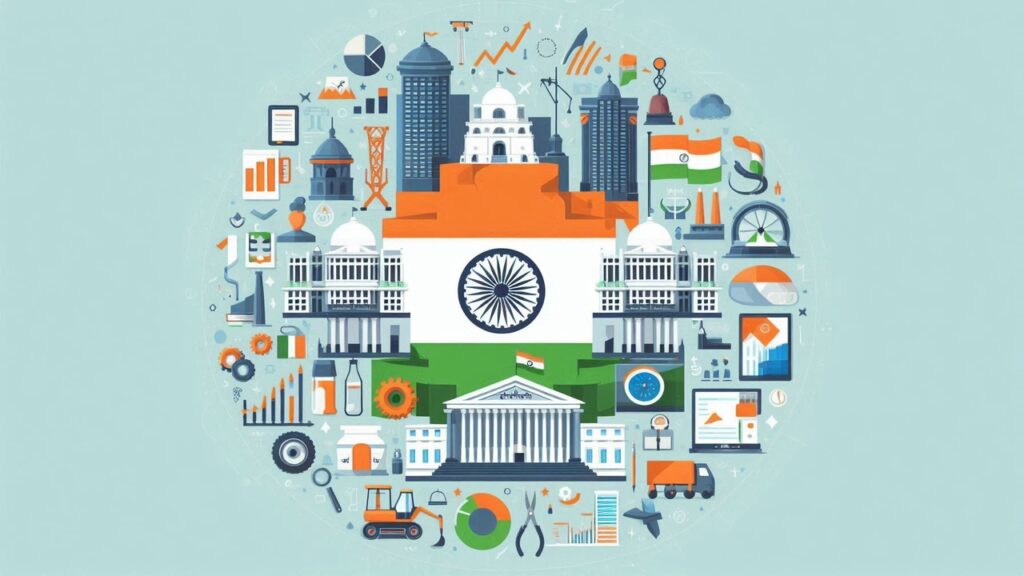
In this blog you are going to get info on achievements of Ministry of Communications India during 2014-24. Plus important detailed UPSC Q & A which is going to increase your knowledge and it is good for any competitive exam as well.
So give it a glance, it will be anyways useful.
Before starting I want to spread info about coding as well. There are MOOC courses and W3schools on the Internet which are free sources of Coding knowledge and Programming. So if you want you can try to go for that also.
Here are a few ways to make money in emergency.
Introduction to the Ministry of Communications, India
The Ministry of Communications is a pivotal arm of the Government of India, overseeing the development and regulation of the country’s telecommunications and postal services. It comprises two primary departments:
- Department of Telecommunications (DoT): Manages policies related to telecommunications, spectrum allocation, and the promotion of digital infrastructure.
- Department of Posts (DoP): Administers postal services, including mail parcel services, banking, and insurance through its extensive network.
The Ministry has been instrumental in advancing India’s digital connectivity and modernizing communication services nationwide.
Key Achievements of the Modi Government (2014-2024) in the Ministry of Communications
1. Digital Transformation and Telecom Expansion
- 5G Rollout (2022-2023): India launched 5G services, significantly enhancing high-speed connectivity.
- BharatNet Project: Aimed at providing broadband connectivity to over 250,000 Gram Panchayats, facilitating rural digital inclusion.
- Mobile and Internet Penetration: Mobile subscribers exceeded 1.2 billion, with substantial growth in internet users, bridging the digital divide.
- Make in India Initiative: Encouraged domestic manufacturing of telecom equipment, reducing import dependence and boosting local industries.
2. Modernization of Postal Services
- India Post Payments Bank (IPPB) – 2018: Established to offer banking services in remote areas, leveraging the vast postal network.
- Digitalization of Post Offices: Over 150,000 post offices computerized and connected digitally, enhancing service efficiency.
- Diversification into E-commerce: India Post expanded into e-commerce logistics, providing parcel and fast-track services.
3. Telecom Sector Reforms
- Telecom Reforms 2021: Implemented measures like reduced spectrum usage charges and eased compliance norms to improve industry viability.
- Relief Packages: Financial support extended to stabilize major telecom companies, including BSNL and MTNL.
- Revival Plans for State-run Firms: Allocated funds for the modernization and competitiveness of state-run telecom entities.
4. Promotion of Digital India and Innovation
- PM-WANI Scheme (2020): Launched to establish public Wi-Fi networks, increasing internet accessibility.
- 5G Testbeds and R&D: Supported indigenous 5G technology development and innovation.
- Production-Linked Incentive (PLI) Scheme: Introduced to promote domestic manufacturing of telecom equipment.
5. Strengthening Cybersecurity and Regulations
- New Telecom Bill (2023-24): Proposed to streamline telecom governance and foster industry growth.
- Measures Against Fraudulent Communications: Implemented regulations to curb spam, phishing, and fraudulent activities.
- Data Protection Initiatives: Enhanced rules to ensure data privacy and security in telecommunications.
6. International Engagement and Strategic Initiatives
- Participation in 6G Development: Positioned India as a contributor to global 6G technology advancements.
- Telecom Exports: Promoted the export of telecom products, expanding India’s presence in global markets.
Economic Impact: GDP Growth and Employment (2014-2024)
GDP Growth
- Economic Expansion: India’s GDP witnessed significant growth, positioning the country as the world’s fifth-largest economy. The nation is on track to become the third-largest economy, reflecting robust economic policies and reforms.
Employment Generation
- Job Creation: The Modi government reported the creation of approximately 125 million jobs over the decade, a substantial increase compared to the previous administration’s 29 million jobs.
Conclusion
The Ministry of Communications, under the leadership of the Modi government from 2014 to 2024, has played a crucial role in transforming India’s digital and communication landscape. Through strategic initiatives in telecommunications and postal services, coupled with significant economic reforms, the government has enhanced connectivity, fostered innovation, and contributed to substantial economic growth and employment generation. These efforts have collectively propelled India towards becoming a leading global digital economy.
Important UPSC Questions regarding Ministry of Communications India :
These questions align with UPSC GS Paper 3 (Economic Development, Infrastructure, and Digital Initiatives) and GS Paper 2 (Governance and Policy Implementation).
1) Discuss the role of the Ministry of Communications in India’s digital transformation over the last decade (2014-2024). Highlight key initiatives and their impact on economic growth. (250 words)
A concise table summarizing the role of the Ministry of Communications (MoC) in India’s digital transformation (2014-2024), along with key initiatives and their economic impact:
| Initiative | Description | Economic Impact |
|---|---|---|
| Digital India (2015) | Promoted digital infrastructure, e-governance, and literacy (DigiLocker, e-Hospital). | Improved public service delivery, reduced corruption, and boosted efficiency. |
| BharatNet | Connected 2.5 lakh Gram Panchayats with broadband. | Enabled rural e-commerce, telemedicine, and digital payments, fostering inclusive growth. |
| PMGDISHA | Trained 6+ crore rural citizens in digital literacy. | Empowered rural populations to access online services and financial tools. |
| 4G & 5G Expansion | Nationwide 4G coverage; 5G rollout in 2022. | Enhanced mobile internet speeds, IoT adoption, and Industry 4.0 growth. |
| India Stack (Aadhaar, UPI, e-KYC) | Digital identity (Aadhaar), instant payments (UPI), and paperless verification. | UPI processed 12B+ monthly transactions (2024), boosting fintech and financial inclusion. |
| Overall Impact | – $1T digital economy (2024) – 100+ unicorns – Rural economic uplift via e-commerce & agri-tech. | Positioned India as a global digital leader, driving innovation and equitable growth. |
2) How has the rollout of 5G services impacted India’s economy and digital infrastructure? Analyze the challenges and opportunities in the telecom sector. (250 words)
The multi-dimensional effects of 5G on India’s economy and digital landscape
| Aspect | Key Points |
|---|---|
| Economic Impact | – Expected to contribute $455B to GDP by 2040 (Ericsson) – Boosts Industry 4.0 (smart factories, automation) – Enhances UPI/digital payments (12B+ monthly transactions) – Enables telemedicine & EdTech in rural areas |
| Digital Infrastructure Impact | – 10x faster speeds than 4G – Enables IoT, AI/ML, and smart city applications – Supports AR/VR and drone technologies – Improves cloud computing and edge computing capabilities |
| Challenges | – High infrastructure costs (fiber networks, small cells) – Expensive spectrum auctions (₹1.5L cr in 2022) – Slow rural penetration due to low ROI – Regulatory delays (Right-of-Way clearances) – Device affordability for mass adoption |
| Opportunities | – “Make in India 5G” (Jio Bharat 5G, Airtel) reduces imports – Smart city development (traffic, energy grids) – Startup growth in AI, drones, metaverse – Job creation in tech and telecom sectors – Global 5G leadership potential |
| Way Forward | – Public-private partnerships for rural rollout – Lower spectrum costs to ease telco burdens – Faster RoW approvals for infrastructure – Subsidized devices for wider adoption |
3) Critically examine the role of the BharatNet Project in improving digital connectivity in rural India. What are the challenges faced in its implementation? (250 words)
BharatNet Project: Impact & Challenges
| Aspect | Achievements | Challenges | Recommendations |
|---|---|---|---|
| Connectivity Reach | Connected 2.5 lakh Gram Panchayats with optical fiber | Last-mile connectivity to villages remains weak | Expand Wi-Fi hotspots in villages |
| Digital Services | Enabled e-governance, telemedicine, and online education | Low utilization due to lack of awareness/devices | Implement digital literacy campaigns |
| Economic Impact | Supported rural e-commerce and fintech adoption | Limited income generation for sustainability | Develop revenue models for viability |
| Infrastructure | Created backbone for Common Service Centers (CSCs) | Frequent outages due to poor maintenance | Strengthen maintenance protocols |
| Implementation | Government-driven nationwide rollout | Slow progress and missed deadlines | Introduce PPP models for efficiency |
| Financials | Central funding ensured project initiation | High operational costs with unclear ROI | Attract private sector investment |
| Policy Framework | Aligned with Digital India mission | Bureaucratic delays in execution | Streamline approval processes |
Key Observations:
- Progress: Significant infrastructure creation but underutilized potential
- Gaps: Last-mile access and sustainability remain major concerns
- Opportunity: Could transform rural economy if challenges addressed
4) India Post Payments Bank (IPPB) has been a key initiative for financial inclusion in rural areas. Evaluate its success and suggest improvements. (150 words)
Evaluation of India Post Payments Bank (IPPB) for Financial Inclusion
Successes
✅ Wide Reach: Leveraged 1.5 lakh post offices to provide banking in remote areas.
✅ Basic Banking Access: Enabled zero-balance accounts, DBT, and doorstep banking for the unbanked.
✅ Digital Push: Assisted Aadhaar-linked payments and UPI adoption in rural India.
✅ Trust Factor: Post office credibility increased rural adoption.
Challenges
❌ Limited Services: No credit/loans—only savings & remittances.
❌ Low Tech Adoption: Many customers still prefer cash transactions.
❌ Agent Network Issues: Inadequate training and connectivity in remote areas.
Improvements Suggested
🔹 Expand Services: Introduce microloans, insurance, and pension products.
🔹 Boost Digital Literacy: Train postmen as banking correspondents.
🔹 Improve Tech Infrastructure: Upgrade handheld devices for smoother transactions.
🔹 Awareness Campaigns: Educate rural users on IPPB’s benefits.
IPPB has expanded access but must evolve beyond basic banking to drive true financial inclusion.
5) The telecom sector in India has witnessed significant reforms under the Modi government. Discuss the Telecom Reforms 2021 and their impact on private and public sector telecom companies. (250 words)
Telecom Reforms 2021 and their impact:
| Category | Key Reforms (2021) | Impact on Private Sector (Jio/Airtel/Vi) | Impact on Public Sector (BSNL/MTNL) | Remaining Challenges |
|---|---|---|---|---|
| Financial Relief | – 4-year moratorium on AGR/spectrum dues – AGR definition rationalized | ✅ Improved cash flow ✅ Reduced debt burden | ✅ Enabled financial revival package (₹1.64L cr) | Vi still struggles with debt |
| Spectrum Reforms | – No SUC charges – 30-year license tenure – Easier sharing/leasing | ✅ Faster 5G rollout ✅ Cost efficiency | ✅ Supports indigenous 4G/5G deployment | High rural 5G costs |
| Ease of Business | – No bank guarantees for auctions – Penalty relaxation for minor breaches | ✅ Lower compliance costs ✅ Faster expansions | ✅ Simplified operations | BSNL’s delayed 4G rollout |
| FDI & Investment | 100% FDI via automatic route | ✅ Boosted foreign funding (e.g., Jio investors) | ✅ Govt capital infusion continues | Need for more private investment |
| Market Dynamics | – Encouraged spectrum trading – Boosted M2M communications | ✅ Increased competition ✅ IoT growth | ✅ Level playing field for BSNL | Vi’s market share decline |
Key Takeaways:
- Private Sector Benefits: Liquidity relief + faster 5G expansion
- Public Sector Gains: Financial revival + tech modernization
- Unresolved Issues: Vi’s survival, rural 5G viability
6) With India’s growing emphasis on domestic telecom manufacturing, discuss the importance of the Production-Linked Incentive (PLI) scheme for the telecom sector. How does it align with the Make in India initiative? (150 words)
PLI Scheme for Telecom & Its Alignment with ‘Make in India’
The Production-Linked Incentive (PLI) scheme for telecom (₹12,195 crore outlay) is a game-changer for India’s self-reliance in telecom manufacturing.
Importance for Telecom Sector:
- Boosts Local Production: Incentivizes manufacturers (e.g., Foxconn, HFCL) to produce 5G gear, routers, and IoT devices in India.
- Reduces Imports: Cuts reliance on Chinese imports (currently ~80% of telecom equipment).
- Attracts Global Players: Companies like Nokia, Samsung, and Cisco have set up local units.
- Job Creation: Expected to generate 40,000+ jobs and ₹2.4 lakh crore in output.
Alignment with ‘Make in India’:
- Strengthens Ecosystem: Links with Bharat 6G Mission and 5G rollout for end-to-end domestic supply chains.
- Encourages MSMEs: 30% of PLI benefits reserved for Indian SMEs.
- Exports Hub: Aims to make India a global telecom manufacturing hub.
The PLI scheme is pivotal in transforming India from an importer to an exporter of telecom tech, reinforcing Aatmanirbhar Bharat.
7) What are the major challenges in cybersecurity and telecom fraud in India? Evaluate the government’s measures to tackle these challenges, including the role of the new Telecom Bill. (250 words)
Cybersecurity and Telecom Fraud in India: Challenges & Government Measures
Major Challenges
- Rising Cyber Threats:
- Phishing, ransomware, and data breaches target banks, businesses, and critical infrastructure.
- Aadhaar/PAN-linked frauds exploit digital payment systems.
- Telecom Fraud:
- SIM swap scams, fake KYC calls, and SMS phishing exploit weak verification processes.
- International spoofing calls impersonating government agencies (e.g., “Income Tax Dept” scams).
- Infrastructure Vulnerabilities:
- Poor encryption in legacy telecom networks.
- Lack of cybersecurity awareness among users.
Government Measures
- Regulatory & Policy Interventions:
- Digital Personal Data Protection Act (2023): Mandates data localization and penalties for breaches.
- Telecom Bill 2023:
- Biometric KYC for SIM cards to curb fraudulent issuance.
- Stricter penalties for spoofing and illegal telecom setups.
- Centralized DoT surveillance to monitor suspicious calls.
- Cybersecurity Initiatives:
- Indian Cyber Crime Coordination Centre (I4C): Tracks financial frauds via the National Cybercrime Reporting Portal.
- CERT-In directives: Mandates 6-hour breach reporting for companies.
- Public Awareness:
- Chakshu Portal (2024): Allows citizens to report fraud calls/SMS.
- Sanchar Saathi Portal: Blocks stolen/lost mobiles and verifies SIMs.
Way Forward
- AI-driven fraud detection in telecom networks.
- Stronger public-private collaboration for threat intelligence.
While government measures are robust, enforcement and tech upgrades remain critical to counter evolving threats.
8) Analyze the contribution of the communications sector to employment generation and GDP growth in India between 2014 and 2024. (250 words)
Contribution of India’s Communications Sector to Employment & GDP (2014-2024)
Employment Generation
- Direct Employment:
- The telecom sector employed ~4 million workers (2024), up from 2.8 million in 2014, driven by 4G/5G expansion and fiber rollout.
- Airtel, Jio, and Vi created 1.5 lakh+ jobs in network deployment and customer support.
- Indirect Employment:
- E-commerce, fintech, and IT services added 8-10 million jobs, enabled by affordable internet (India’s 850 million+ internet users in 2024).
- Gig economy (Swiggy, Zomato, Uber) grew due to mobile penetration, employing 15 million+.
- Rural Impact:
- Common Service Centres (CSCs) and BharatNet generated 1.2 lakh rural digital entrepreneurship jobs.
GDP Growth Contribution
- Sectoral GDP Share:
- Telecom’s GDP contribution rose from 1.94% (2014) to 3.2% (2024) (₹9.5 lakh crore).
- Digital economy (incl. e-commerce, OTT, UPI) grew to $1 trillion, fueled by communications infra.
- Key Drivers:
- Jio’s disruption (2016): Cheap data spurred digital adoption, adding $20 billion annually to GDP.
- 5G rollout (2022+): Expected to add $455 billion to GDP by 2040 (Ericsson).
- UPI/digital payments: Enabled by mobile networks, now contribute 6.6% to GDP.
Challenges
- Skill gaps in emerging tech (5G, IoT).
- Vodafone Idea’s decline led to job losses.
Conclusion
The communications sector has been a key employment multiplier and GDP accelerator, but sustaining growth requires upskilling and policy stability.
9) Compare India’s 5G strategy with global leaders like the USA and China. What steps can India take to become a leader in 6G technology? (250 words)
Comparison of India’s 5G Strategy with USA & China
| Aspect | India | USA | China |
|---|---|---|---|
| Rollout Speed | Fastest 5G rollout (2022-24) – 200+ cities | Gradual, carrier-driven (since 2019) | Dominant global leader (600K+ base stations) |
| Spectrum Allocation | Auction-based (private telcos) | Mix of auctions & private leases | State-controlled (China Mobile) |
| Indigenous Tech | Reliance Jio’s Bharat 5G stack | Open RAN (ORAN) partnerships | Huawei’s end-to-end 5G dominance |
| Affordability | Lowest 5G tariffs globally | Premium pricing | Subsidized by government |
| Use Cases | Focus on rural healthcare, education | Enterprise IoT, smart factories | Smart cities, surveillance |
Steps for India to Lead in 6G
- Early R&D Investment:
- Scale up Bharat 6G Mission (₹6,000 cr allocated) with academia-industry collaboration (e.g., IITs + TCS).
- Indigenous Standards:
- Develop India-specific 6G protocols via Telecom Standards Development Society India (TSDSI).
- Testbed Infrastructure:
- Establish 6G innovation zones (like China’s Hunan lab) for startups.
- Global Partnerships:
- Join Next G Alliance (USA) while avoiding over-reliance on Chinese tech.
- Policy Support:
- Pre-emptive spectrum allocation & tax incentives for 6G patents.
- Security-Centric Design:
- Integrate quantum encryption to counter cyber threats.
Conclusion
India’s 5G approach balances speed and affordability, but 6G leadership demands strategic R&D, global collaboration, and homegrown innovation. With focused efforts, India can emerge as a 6G frontrunner by 2030.
10) How does the Modi government’s vision of Digital India align with the policies of the Ministry of Communications? Discuss with examples. (250 words)
Table comparing Digital India’s Vision with the Ministry of Communications’ Policies and their outcomes:
| Digital India Pillar | Ministry of Communications (MoC) Initiatives | Key Achievements (2014-2024) | Impact |
|---|---|---|---|
| Universal Connectivity | – BharatNet (Fiber to Gram Panchayats) – 5G Rollout (Fastest in the world) | – 2.5 lakh+ GPON connections – 5G in 200+ cities within 1 year | Bridged rural-urban digital divide |
| Affordable Access | – Spectrum reforms enabling Jio’s low-cost data – PLI Scheme for local telecom manufacturing | – Mobile data cheapest globally (₹20/GB) – ₹6,000 4G smartphones | 850M+ internet users (2024) |
| Digital Governance | – India Stack (Aadhaar, UPI, DigiLocker) – Common Service Centres (CSCs) | – 1.3B+ e-KYC verifications – 5L CSCs delivering 400+ services | Paperless, faceless service delivery |
| Cybersecurity & Trust | – Sanchar Saathi Portal – Telecom Bill 2023 (Biometric KYC) | – 5.2M fraudulent SIMs blocked (2023) – Reduced phishing/spoofing | Enhanced user safety |
| Innovation & Startups | – 5G Testbeds for IoT/AI – Bharat 6G Mission (₹6,000cr fund) | – 100+ 5G use-case startups – Global 6G patent filings | Positioning India as tech leader |
Key Takeaways:
- MoC’s policies directly execute Digital India’s goals through infrastructure (BharatNet), affordability (PLI), and innovation (6G).
- Synergy between vision (Digital India) and action (MoC) has made India the fastest-growing digital economy.
- Future focus: Rural 5G, cybersecurity, and indigenous tech (e.g., 6G R&D).
Useful references :
- Use DoT/TRAI reports for official data.
- Cite World Bank/Ericsson studies.
- Check PIB or news portals like The Hindu BusinessLine or Economic Times.
World Bank Report on Digital India
- https://www.worldbank.org/en/country/india/brief/digital-india
(Impact on GDP, jobs, and financial inclusion)
Ericsson Mobility Report (2024)
- https://www.ericsson.com/en/reports-and-papers/mobility-report
(5G/6G growth projections and India’s global standing)
I hope you liked this UPSC Questions & Answers and Research.
Best of luck
More Readings :
Stocks : 8 Best Metal Companies of USA
Sports : Best Netherlands Football Team ever – An Interesting Read